
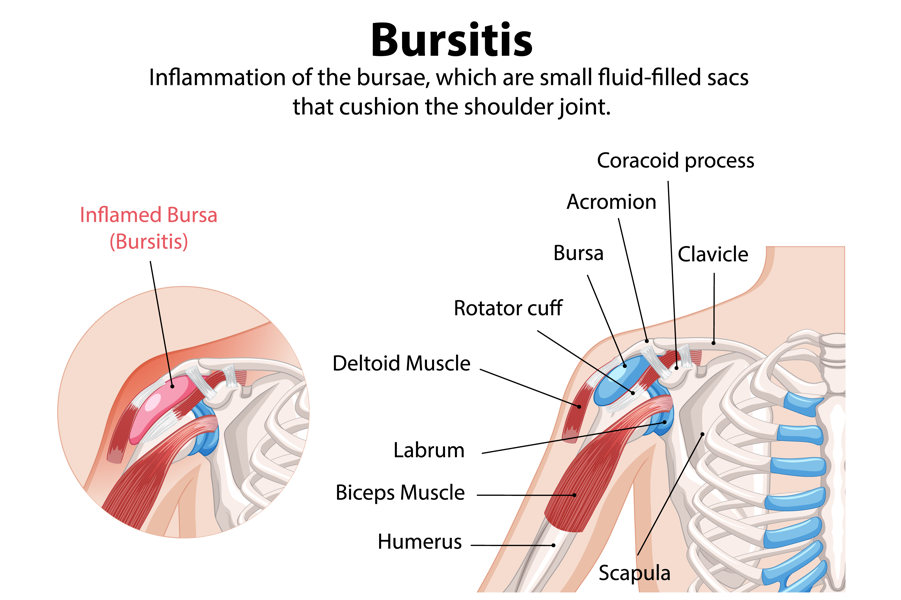
What Is Bursitis?
Bursitis is a condition where small fluid-filled sacs, called bursae, become swollen or irritated. These sacs help cushion your joints and reduce friction between bones, muscles, and tendons. When bursae get inflamed, you may feel pain and stiffness. Bursitis often affects the shoulder, elbow, hip, or knee. However, it can happen in other joints too. According to the CDC, bursitis is a common cause of joint pain, especially in adults.
Common Symptoms of Bursitis
Recognizing bursitis symptoms early can help you get treatment sooner. While symptoms may vary, most people notice:
Sometimes, symptoms get worse with movement or pressure. For example, kneeling may make knee bursitis more painful. If you notice these signs, you may want to seek joint pain relief.
Causes and Risk Factors
Many things can cause bursitis. Often, it happens after repeated movements or pressure on a joint. For instance, athletes or people with jobs that require kneeling or lifting are at higher risk. Other causes include:
Additionally, being overweight or having poor posture can increase your risk. Knowing these risk factors can help you learn how to prevent bursitis.
How Bursitis Is Diagnosed
If you have joint pain, a doctor can help find out if it is bursitis. First, your doctor will ask about your symptoms and examine the joint. Sometimes, they may order tests like:
Early diagnosis can lead to better treatment for bursitis and faster recovery.
Treatment Options for Bursitis
Treatment for bursitis depends on the cause and how severe it is. Most cases improve with simple self-care. However, some may need medical help. Common treatments include:
In some cases, doctors may suggest:
Surgery is rare and only needed if other treatments do not work. Always talk to your doctor before starting any new treatment for bursitis.
Prevention Tips and Lifestyle Guidance
Although bursitis can happen to anyone, you can lower your risk. Try these tips to help prevent bursitis:
Furthermore, avoid sudden increases in activity. If you feel pain, stop and rest. These steps can help you stay active and avoid joint pain relief treatments.
When to See a Doctor
Sometimes, bursitis can get worse or lead to other problems. You should see a doctor if you have:
Early medical care can prevent further joint damage and help you recover faster.
Conclusion
Bursitis is a common cause of joint pain and swelling. With early care and simple steps, most people recover well. If you have joint pain or suspect bursitis, consult at REGENIO Center for Orthopaedics for personalized advice.